DemocrezGet the app

Two people, or a few

Together.

Send a situation to one person, or to a small private circle. Everybody answers alone and blind. Nobody — including whoever sent it — sees anything at all until everybody has answered. Then the group sees the shape of its own disagreement.

One rule holds the whole thing up.

A reading with other people is fragile in a way a solo round is not. If you can see that your friend answered before you answer, you are no longer recording what you think — you are recording a response to them. If the sender can watch replies arrive one by one, the last person to answer is answering a different question from the first.

So the rule is absolute and enforced by the system rather than by etiquette: nothing is visible to anybody until every invited person has answered. Not a partial count, not a running tally, not a hint of which way it is leaning.

While waiting

Everybody sees the same thing: nothing

The sender sees how many people have answered, and nothing else. No names against answers, no direction, no early aggregate. The people invited see only whether it is their turn.

Once everyone has answered

Everybody sees the same thing: all of it

The reading opens for every participant at the same moment, with the same content. There is no owner's view, no extra detail for whoever started it, and nothing that arrives earlier for anyone.

Two kinds of reading

With one person,
or with a small circle.

Both use the same situations and the same blind rule. What differs is who is on the other side, and therefore what the result can honestly tell you.

Two people

Pair reading

You send one situation to one person. You both answer, you both predict, and when the second answer lands the reading opens for both of you at once.

  • You see whether you chose the same option
  • You see how each of you expected the wider public to answer
  • You see whether you read each other correctly, or read past each other
  • Neither of you can see anything before the other has answered

A few people

Circle reading

A circle is a small group you have made — a family, a team, a set of friends. You run a reading inside it, and the circle sees itself as a group rather than as a list of individuals.

  • The circle sees how it split, as a shape
  • It sees where the group as a whole misread the public
  • It does not see who chose what
  • It does not rank, score or order its members
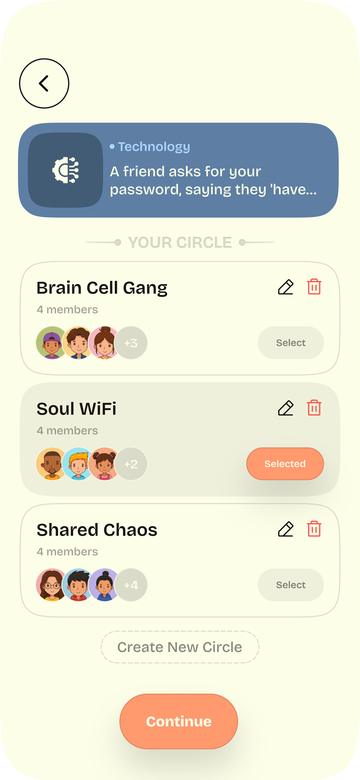
A screen for creating a private circle and adding members

Make a circleA small group you create. It exists only for the people inside it.

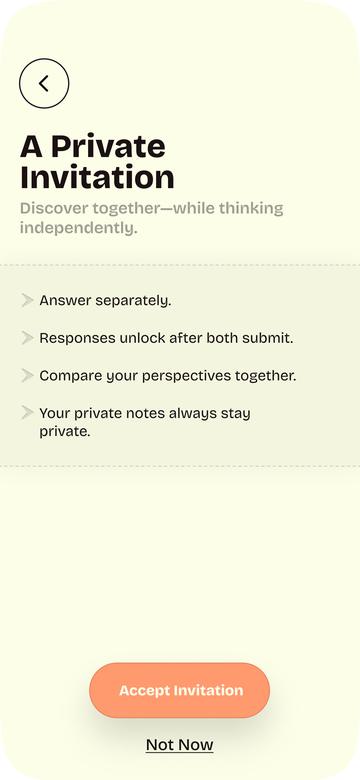
An invitation screen explaining that both people answer separately and results unlock only after both submit

Send a situationThe invitation states the rule up front: answer separately, and nothing unlocks until both have submitted.

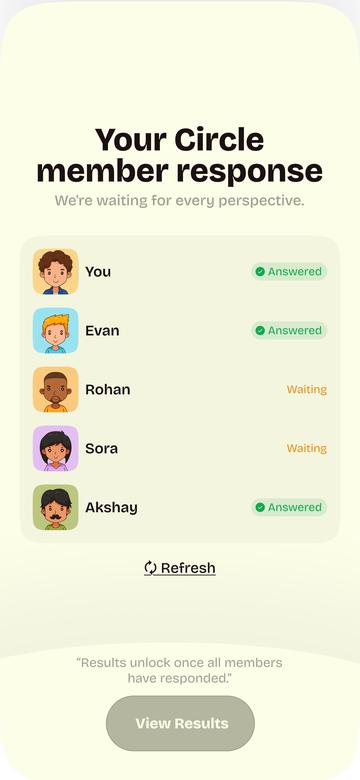
A screen showing how many people have answered, with no results yet

Wait, blindWho has answered, and nothing beyond that — no answers, no direction, no early aggregate.

The hard part

A circle is a container,
not a relationship record.

This is where a product like this usually goes wrong, so it is worth being exact. Democrez has no social layer, and adding one later would break the anonymity that every other promise on this site rests on.

No member is ever ranked

The circle never learns who read the public best or worst. There is no order, no highest, no lowest, and no quiet visual cue that implies one.

No answer is attached to a name

Once submitted, a choice joins the circle's aggregate. The system does not retain a link from that choice back to the person who made it.

No history is kept about a person

There is no record of how you tend to answer, no profile another member can browse, and nothing that accumulates about you across readings.

No follower graph, ever

You cannot follow anyone, see who else they read with, or discover circles you are not in. A circle exists only for the people inside it.

Why the group is shown as a shape

When a small group disagrees, the interesting fact is almost never who sat where. It is that the group contained a split at all — that people who share a house, a team or a decade of friendship read the same situation differently. Naming who was where turns that into an argument. Showing the shape leaves it as a finding.

It also protects the answers. The moment a member suspects their choice can be traced, they start answering the version of themselves the group expects, and the reading records that instead.

Start to finish

How a reading runs.

Five steps. The only one that involves anybody else is the waiting, and even that is silent.

01

Pick a situation

Choose from the deck, across the eight territories. The same sealed cards used everywhere else.

02

Send it

To one person, or to a circle. The invitation carries its type before it is created, so nobody is surprised by what they are joining.

03

Everyone answers alone

Each person reads, chooses, and locks a prediction — exactly as in a solo round, with nothing visible from anybody else.

04

Wait, blind

The sender sees a count of how many have answered. That is the entire status. No direction, no early result, no names.

05

It opens for everyone

The last answer opens the reading for every participant at once, with identical content for each of them.

Underneath

Where the answers go.

A reading with other people is still a measurement, and the same four conditions apply to it as to everything else on the platform.

Into the same record

Answers are appended anonymously to the Reality Bank, alongside solo answers to the same card. They are not stored as a group's private dataset. The Reality Bank

Min-N still applies

The public aggregate you are compared against appears only once enough verified people have answered it — a small circle can never generate it on its own. How Min-N works

Nothing is invented

If a circle is too small to say anything, the reading says so rather than producing a percentage that sounds like a finding. Why we never fake it

The same sealed cards

You cannot write your own situation for a circle. Every card has passed the same review and carries the same Human Seal. The Human Seal

Questions

Straight answers.

Can the person who sent it see replies as they arrive?

No. The sender sees a count of how many people have answered and nothing else — no names against answers, no direction, no partial aggregate. The reading opens for the sender at the same moment it opens for everybody else.

Will my friends see what I chose?

No. Your choice joins the reading's aggregate and is not stored against you. In a circle the group sees how it split as a shape, not a list of who sat where, and there is no view anywhere that reveals an individual member's answer.

What happens if somebody never answers?

The reading stays closed. It does not open partially, and it does not open after a timer with the missing person excluded, because either would change what the remaining answers meant. The people who answered keep their own round; the group reading simply does not resolve.

Is a circle the same as a friend list?

No. A circle is a container you create for running readings, not a social connection that persists in a profile. You cannot follow people, browse who else they read with, or discover circles you are not part of. Nothing about your relationships is recorded.

Does the circle get ranked, or do members get compared?

No. There is no ordering of members, no best or worst reader, and no score of any kind. The circle sees where it disagreed and where it collectively misread the public, and that is the entire output.

Can I write my own situation for my circle?

No. Every situation comes from the same sealed deck used across the platform, each one reviewed and approved by a person before release. A custom card would sit outside that review and could not be compared against any public aggregate.

How many people can be in a circle?

A circle is deliberately small — it is meant for a family, a team or a set of friends, not an audience. A group large enough to behave like a public sample would be answering a different kind of question, and that is what the public deck is for.

Read one with somebody.

One situation, sent to one person or a small circle. Everyone blind until everyone has answered.